
Why No One Has Won the Flooring Market Yet
Albert Hermans, Chief Development Officer of Floor Coverings International, on the flooring franchise opportunity big-box retail cannot replicate
Most people who walk into a flooring store think they already know what they want. They’ve scrolled through inspiration photos, they have a color in mind, and they’re hoping someone behind the counter can point them toward the right aisle. But the product they choose in a showroom, under fluorescent lights, against a neutral display wall, often looks completely different once it’s in their home. The dog, the sliding glass door to the pool, the east-facing window in the kitchen: none of that exists from a warehouse counter. That gap is where this flooring franchise opportunity was built.
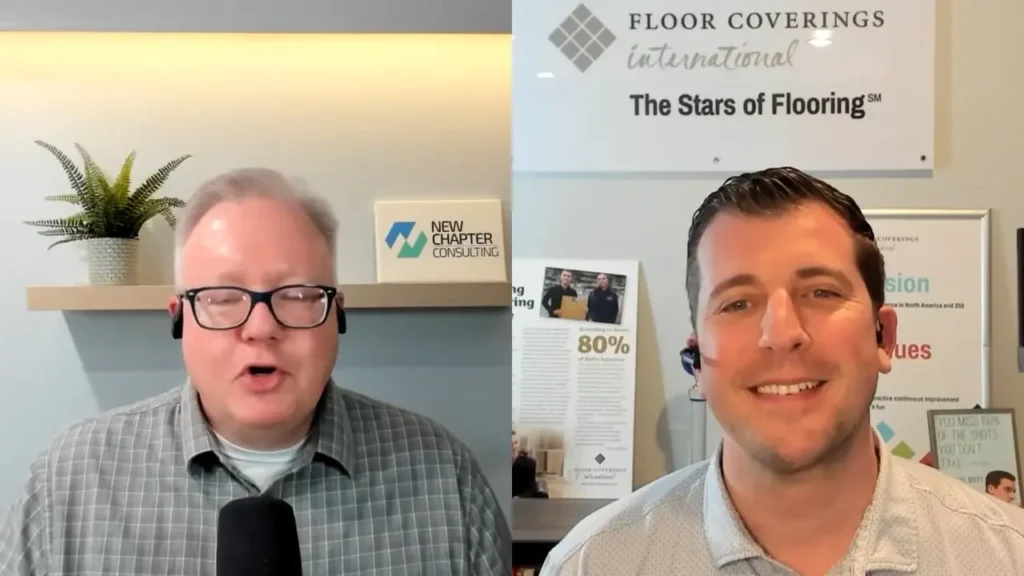
In this Franchise Spotlight conversation, I sat down with Albert Hermans, Chief Development Officer of Floor Coverings International. Albert joined FCI in 2015 on the operations side, working directly with franchisees to build their businesses before moving into franchise development in 2020. That path gives him a perspective most development officers in franchising don’t have: he has seen what the model produces in the field, not only what it looks like on paper.
The Store Was Never the Point
Albert opened with a description of FCI’s core customer that I found immediately clarifying. The primary buyer in the flooring industry is the upper-middle-class female homeowner. Same demographic as Sephora. She is making a significant decision about her living environment, and she is not looking for a warehouse experience. She wants someone who understands her space.
FCI’s model puts the franchise owner, or a trained salesperson from their team, inside that space. They bring samples to the customer’s home, where the product sits next to the actual furniture, in the actual lighting, in the room where it will live. The conversation shifts from inventory to need. Because the salesperson is in the home, they can see what a showroom never could: the two German shepherds, the sliding glass door to the pool, the flooring that connects two rooms the customer forgot to mention. Those details shape the recommendation completely.
Albert was specific about what this produces at the business level. Conversion ratios are higher when the sale happens at the moment of peak customer excitement, before someone drives home and starts second-guessing. Average job size tends to grow because being in the home surfaces scope that stays invisible from behind a counter. FCI teams also price the full job upfront: furniture moving, material haul-away, the baseboards that will need paint after installation. Other companies leave those line items out of the initial quote and charge for them later. FCI builds them in from the start, and customers remember it. Albert cited FCI’s net promoter score as the highest in the industry, independently verified through third-party administration. The creator of the Net Promoter Score methodology sits on the board of FCI’s parent company, which means the scores cannot be managed or adjusted by the brand itself.
The Number That Reframes Everything
Here is the statistic that stopped me mid-conversation. The top 50 flooring companies in the United States account for just 10% of the total market. Ninety percent is served by independent, unbranded operators with no systems, no technology advantage, and no national support structure behind them. That is why no one has won this industry. It is simply too fragmented, and the dominant retail players have a model that cannot follow the customer home.
An FCI owner does not need to compete with Home Depot for scale. They need to capture 4% of their local market. In a year when the overall market contracts by a few percent, 4% is still an achievable target with consistent execution. Albert’s point was precise: this is a market-share capture business, not a market-creation business. The floors already need replacing. The customers already exist. The question is which operator they find first, and whether that operator shows up with something the independent down the road cannot match.
Who Actually Fits This Business
One of the most practically useful parts of my conversation with Albert was the clarity he brought to ownership fit. Nearly zero FCI franchise owners have prior flooring experience. Albert draws a firm line between knowledge and skill set. Knowledge, including product knowledge, measuring, and estimation, can be taught. FCI has proprietary tablet software that reduces the technical side of the job to roughly a day of training. What the system cannot teach is how to lead people, how to build a team culture, or how to walk into a stranger’s home and earn their trust in the first five minutes. Those patterns are already formed by the time someone becomes a serious business candidate.
The owners who build strong FCI businesses describe their best professional years in terms of the teams they developed. They look forward to networking with realtors and interior designers. They see building local relationships as part of the work, not a tax on it. The candidate who is not a fit is equally specific: someone drawn to a solo operation, more comfortable behind a screen, or not interested in hiring and developing a small team. Neither profile is worse. They are pointing at different opportunities.
A System Built From 30 Years of Skinned Knees
Albert was candid about where FCI’s support infrastructure comes from. Thirty-plus years of iteration, he said. Systems that got tested, broke in places, and were rebuilt. That history shows up in the training structure, which is deliberately staged to meet owners at the moments when the learning will actually land. Initial training before opening. A live course the week before grand opening. Then, 90 days into operations, when new owners are familiar enough with the business to have formed habits but disoriented enough that some of those habits are pointing the wrong direction, FCI brings them back. In peer groups. To course-correct before the patterns calcify.
From there, training arrives at milestones: when an owner is ready to hire a first salesperson, a second, production staff. The material comes when it is applicable, not front-loaded into a week of classroom instruction the owner cannot yet process. Albert also emphasized that FCI franchise owners are always placed in peer cohorts, because the reinforcement that sticks tends to come from other owners who have solved the same problems, not from a corporate manual.
What the Timing Means
Albert described FCI’s current stage as a late-teenage brand: mature enough to carry decades of operational iteration and the purchasing power of a publicly traded parent company, still young enough that most major metro areas carry open territory. The brand is approaching what he called a tipping point, moving toward the kind of consumer name recognition that changes how leads arrive. That window describes a specific moment for a prospective owner. The infrastructure of a mature system alongside the growth trajectory of a brand that has not yet saturated its market does not stay available indefinitely.
If you are drawn to home services, interested in a high-ticket business that does not require managing large crews of day labor, and you want to build something with local roots and a national system behind it, this is worth a careful look. Reach out, and we can explore whether your market fits.