
The Retirement Funding Strategy Almost No One Considers First
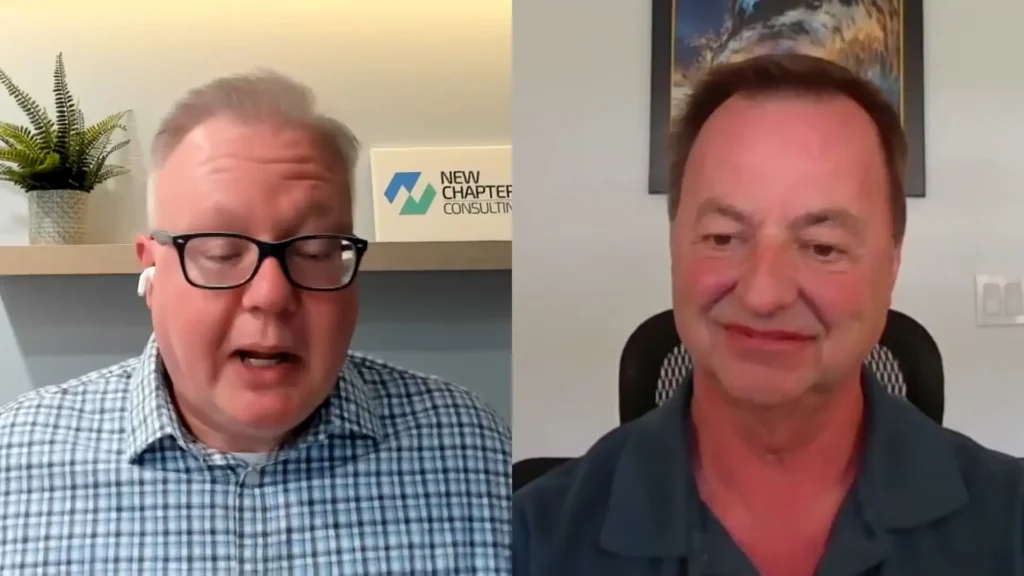
A conversation with Al Lesko, President of Fund My Franchise, on the retirement-based funding strategy most business buyers never fully understand.
When people ask me how to get funding for a business, the conversation usually moves pretty quickly toward SBA loans. That is the familiar path. Most people have heard of it. Their CPA has an opinion about it. Their banker can explain it. It feels like solid ground.
What almost never comes up, at least not without prompting, is using retirement savings. The moment someone raises it, a particular kind of caution enters the room. “Don’t touch your retirement.” “The tax exposure isn’t worth it.” “Your money is safer in the market.” These are not unreasonable things to say, and they usually come from real concern. What often gets skipped is a side-by-side look at the actual numbers.
In this episode of Ownership Essentials, I sat down with Al Lesko, President of Fund My Franchise, for a close look at ROBS, Rollovers for Business Startups. Al has spent over a decade helping aspiring owners work through their funding options, and he may be one of the clearest thinkers I have talked to about where retirement-based funding actually fits, and where it does not.
The Strategy Many People Dismiss Before They Understand It
ROBS has been around since 1974. The mechanics work like this: you establish a C Corporation, set up a qualified retirement plan inside that corporation, and roll funds from an existing IRA or 401(k) from a prior employer into the new plan. That plan then purchases stock in your C Corp, which puts capital directly into your business checking account. No loan, no interest, and no repayment schedule.
Al describes it as a diversification of your retirement account, not a liquidation of it. The distinction matters. You are not cashing out and paying a penalty. You are redirecting a portion of your retirement portfolio from stocks and mutual funds into a different kind of investment: a business you own and operate. The retirement account still exists. It now holds equity in your company.
The plan also requires you to become a W-2 employee of your own C Corporation, and it opens the door to meaningful retirement contributions going forward. Al walked through a scenario where a business owner under 50 could contribute up to ≈$70,000 annually into the ROBS retirement account, funded by business earnings, reducing both their personal taxable income and the corporation’s taxable income at the same time. For owners over 50, that ceiling is ≈$80,000. When the business is eventually sold, the portion of proceeds attributable to the retirement account’s stock ownership goes back into the plan, sheltered from capital gains tax.
That is a set of advantages most people never get to evaluate because they stopped listening when someone said “don’t use your retirement savings.”
The Double-Taxation Objection
The most common argument against ROBS is the C Corporation double-taxation problem. A C Corp is a standalone tax entity, not a pass-through like an LLC or S Corp. The business pays taxes on its profits, and then you pay income taxes again on the salary you draw from it. That is a real structural feature of C Corps, and it is not nothing.
Al does not dismiss the concern. He just refuses to treat it as the end of the conversation. C Corporations have more deductions available than S Corps or LLCs, and the retirement account contributions are business expenses that reduce taxable income.
A 10-year SBA loan on $150,000 will cost roughly $85,000 in interest over its full term. That is money leaving the business with no equity benefit, no retirement contribution, and no tax-advantaged exit. Laid against that, the overhead of maintaining a ROBS plan looks different. There is a one-time setup fee around $5,000, a monthly administration fee of $145, and an annual valuation of approximately $600, and those costs are also legitimate business expenses that offset taxable income.
“C Corps have double taxation” is a starting position. But it is not a complete analysis.
Bringing Everyone Into the Same Conversation
Al’s perspective here is useful because it does not require anyone to be wrong. ROBS is a specialized strategy, and most CPAs and financial advisors have simply had fewer occasions to work directly with one than they have with a standard SBA loan. That is less a reflection of expertise and more a reflection of how often the strategy comes up in a typical practice.
His suggestion, when an advisor raises a question, is to bring everyone into the same conversation. Get your CPA or financial advisor on the phone with your funding specialist and go through the numbers together. The goal is not to settle a disagreement. It is to make sure every advisor in the room is working from the same complete picture of how the structure works.
Most hesitation, Al has found, eases once the mechanics are visible to everyone involved. A CPA who sees the contribution limits, the tax treatment, and the full cost comparison side by side with an SBA loan often reaches a more nuanced view than a quick first reaction would suggest. The conversation moves faster when it starts from shared information rather than from a default caution.
What You Are Actually Putting at Risk
For people who are genuinely risk-averse about this, Al’s most clarifying moment came when a client said he preferred a home equity line of credit because it felt safer than touching retirement funds. Al’s response was measured: if the business struggles, a HELOC puts your house at risk, and a ROBS plan puts a portion of your retirement account at risk. Those are different bets with different consequences, and one is not obviously safer than the other.
The actual risk in ROBS, as with any business investment, comes down to the business itself. Al is direct about that. The only variable he cannot truly account for is how much effort and judgment the owner brings. Everything else, the funding structure, the tax advantages, the ongoing compliance, is manageable with the right support.
For people sitting on retirement accounts that represent their largest liquid asset outside of home equity, that framing matters. A $500,000 retirement account is not all-or-nothing. Carving out $150,000 to seed a franchise while leaving the rest invested spreads the risk across two different kinds of assets, which is what a hedge actually looks like in practice.
A Decision Worth Taking Seriously
ROBS is not the right answer for everyone. Al says that directly. Some clients are better served by an SBA loan. Some should use liquid savings. Some should combine sources. The right answer depends on the cost of capital at the time, the type of business, the owner’s age and tax situation, and what their financial life looks like beyond the business.
What Al is advocating for is a complete analysis before any option gets ruled out by reflex. If you are exploring how to get funding for a business and you have retirement savings from a prior employer, understand what ROBS is and what it costs as part of that full picture.
If you want to think through your funding picture before you get deep into any specific option, I am glad to be a starting point. Reach out and we can map out where you are before any decision gets made.