
A franchise model that removes most of the traditional barriers to franchise ownership.
Ask any experienced franchise buyer what they want before signing anything, and protected territory will be near the top of the list. It makes sense on the surface. You invest in a market, you build relationships, you do the work. You want to know no one else wearing your brand’s logo can walk in and claim what you built.
Yet, Schooley Mitchell has operated without geographic territories since its founding 28 years ago. That was a deliberate strategic choice, and it came out of a specific problem the cost reduction consulting model creates that a geographic boundary cannot solve.
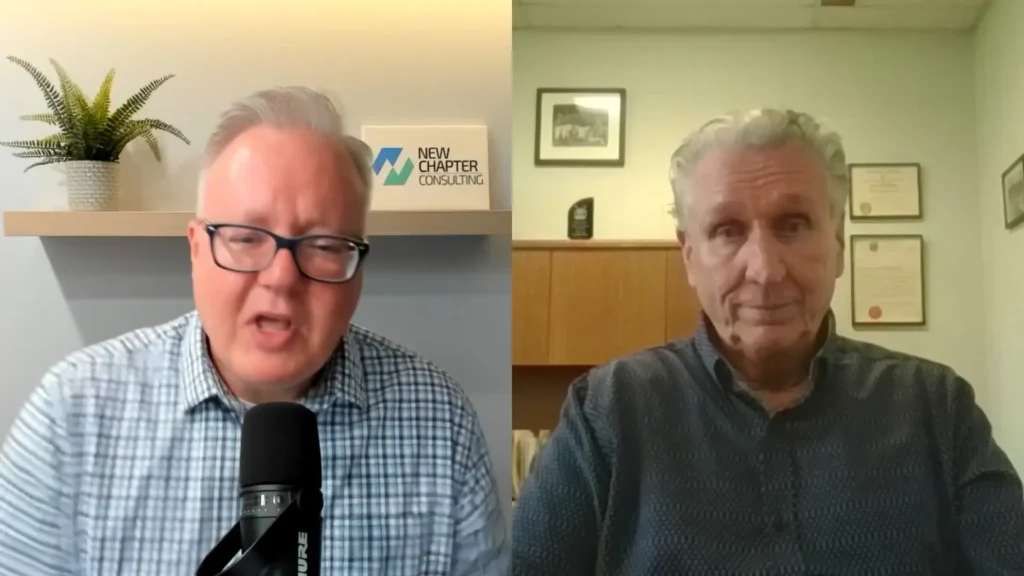
In this episode of Franchise Spotlight, I sat down with Dennis Schooley, founder and CEO of Schooley Mitchell, the largest independent cost reduction consulting firm in North America. Dennis started his career as a CPA and discovered the business that would become Schooley Mitchell inside his own practice. The conversation covers how the model works, who it’s built for, what ownership actually looks like day to day, and why the no-territory structure works the way it does.
Why Territories Don’t Work for a Multi-Location Client Business
The no-territory decision came out of a practical problem. When Schooley Mitchell was founded, it focused entirely on telecom. As they started thinking about how to assign geographies to franchisees, the model broke down almost immediately.
A client in Boston might have branch offices in Seattle, Orlando, Los Angeles, and Toronto. If a franchisee’s territory is defined by a city or a zip code cluster, do they only serve the Boston location? Do they hand off the other locations to four different franchisees? Neither option serves the client well, and neither protects the franchisee’s interests. The thing worth protecting, Dennis reasoned, was the client relationship, not the patch of land.
So instead of territories, Schooley Mitchell built what they call the permanent client registry. When a franchisee signs a client, that client is logged in a central system and becomes the exclusive property of that franchisee across the entire Schooley Mitchell network. No other franchisee can pursue or serve that client. The protection travels with the relationship, not with a geographic boundary.
What the Registry Actually Protects
Dennis explained a second layer called the temporary registry, which functions as a prospect protection pool. Each franchisee receives an allotment of 240 months they can draw from to protect active prospects. Different business types use different amounts from the pool. A nonprofit might use three months; a manufacturer might use nine. As long as a franchisee is actively pursuing a prospect, that prospect is shielded from other franchisees in the system.
Readers skeptical of this deserve a direct answer: the protection is real, it is enforceable, and it can be verified in the FDD. Dennis noted that conflicts essentially do not happen within the system because of how the registry is structured.
For a cost reduction consulting business built around multi-location clients, a geographic boundary protects the wrong thing. It protects a patch of land rather than the client relationship that actually generates revenue. Demographic shifts, traffic patterns, the composition of buyers in a given area, all of these can change. A territory that looked valuable at signing may look very different in year three. The permanent client registry protects the specific revenue stream a franchisee has actually built, not an assumption about what a piece of geography might produce.
What the Model Demands From an Owner
The no-territory structure also shapes what kind of owner this business needs. Because a franchisee can build a client base anywhere in the United States or Canada, the ceiling on growth is not geography. It is relationship-building capacity and consistency.
Dennis was direct about what that means. Schooley Mitchell is a professional B2B consulting business. The franchisee’s job is to get in front of business owners, CFOs, controllers, and COOs and have a conversation about whether the company’s recurring vendor costs are as low as they should be. That is the whole of the sales motion. The analytical work, the benchmarking, the negotiation with vendors: all of that is handled by a team of specialists at Schooley Mitchell’s head office.
Eighty percent of franchisees operate as solo practitioners. That is possible because the franchisee is not doing the technical work. They are doing the relationship work. A solo operator can still build a substantial practice because the analytical and negotiating work is handled centrally.
Dennis described the ideal franchisee profile plainly: someone with a background in management, sales, executive leadership, or consulting who is comfortable talking to other business people. The credibility a franchisee brings to the conversation matters, but it comes from representing the organization and its 34,000-client knowledge base, not from being a subject matter expert in telecom pricing or merchant services processing.
The Sales Conversation No Territory Can Protect You From
One thing a permanent client registry cannot fix is the reality of a sales cycle. Dennis was honest about this. The business takes time to build. The first four or five months involve landing clients, completing analyses, and waiting for savings to be implemented before revenue begins flowing. He compared it to building any professional practice: the referral base and the recurring revenue develop together, and neither happens overnight.
Schooley Mitchell tracks close ratios carefully across its franchisee base, and the pattern is consistent: converting prospects into clients requires sustained outreach over multiple contacts before a decision comes. The system provides scripts, coaching, and support, but the activity has to come from the owner.
The revenue structure, once clients are in place, creates a recurring annuity. Franchisees receive 50% of documented savings for a three-year period. After that initial term, many franchisees who actively maintain client relationships have reported successful renewals for future terms. The reason the business can hold exit value is because the client registry creates a documented, transferable revenue stream.
Why the Economy Is Not a Risk Factor
The most counterintuitive claim Dennis made was about business resilience. In economic downturns, when businesses are tightening spending, Schooley Mitchell’s pipeline tends to improve. Cost reduction becomes a priority for finance leaders who need to protect margins without cutting headcount or operational capability. Since Schooley Mitchell charges clients nothing upfront and collects only from realized savings, there is no budget to approve. The conversation becomes easier, not harder, when the economy tightens.
Dennis made the same argument about AI disruption. Schooley Mitchell is using AI to sharpen internal tools and improve turnaround time. What AI cannot replicate is the negotiating position that comes from 5,200 vendor relationships and proprietary pricing arrangements built over nearly three decades. Vendor-specific pricing is not public information. It does not exist in a training dataset. A software tool can identify that a company might be overpaying; it cannot walk into that vendor negotiation with Schooley Mitchell’s history behind it.
Schooley Mitchell is a specific kind of business for a specific kind of person: someone from a professional background who wants to build a B2B practice, is comfortable leading a sales conversation at the executive level, and understands that the first year is about building the foundation, not collecting the harvest.
If you are trying to figure out whether Schooley Mitchell belongs on your shortlist, I can help you work through that. Book a no-cost, 20-minute call. We will look at where you are, what you need, and whether this is the right fit for where you want to go.