
Most people treat franchise funding the same way they treat car insurance. They know they need it. They assume it will work out. They don’t think about it until the last possible moment.
That approach works fine if you’re renewing a policy. It fails completely if you’re trying to buy a business.
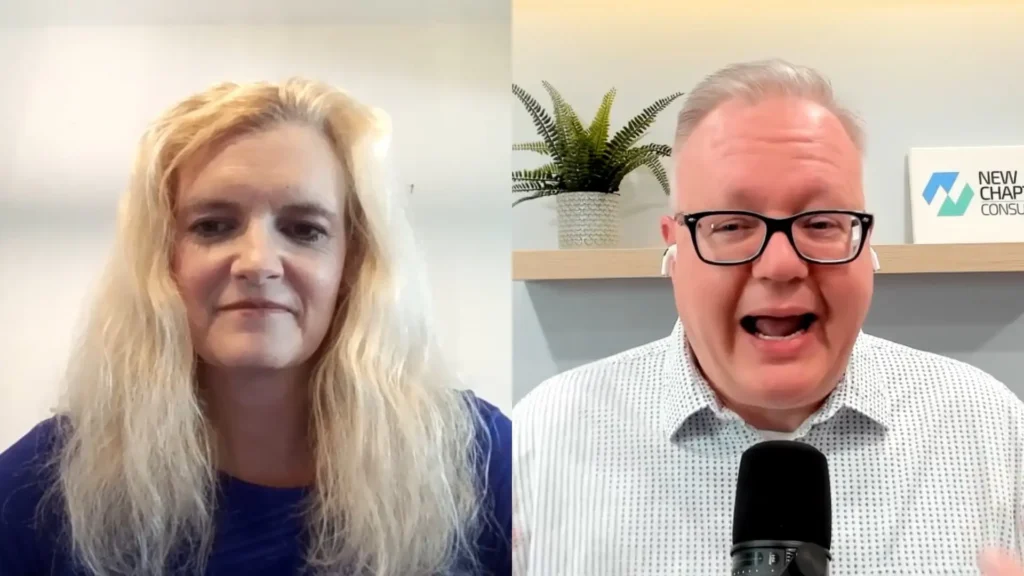
In this Ownership Essentials conversation, I sat down with Michele Simones, a franchise funding specialist with Guidant Financial. Michele’s background spans financial consulting, sales leadership, and business ownership, so she brings more than a lender’s perspective to these conversations. At Guidant, she helps aspiring owners navigate their financing options, including strategies that let you tap retirement funds without penalties, as well as traditional debt financing like SBA loans.
What became clear early in our conversation: most candidates arrive with a single assumption baked into their plan. They will apply for an SBA loan when the time comes, and it will get approved. Michele sees this assumption fail regularly. The failure happens because funding was treated as a final step instead of a strategic input, and the candidate’s creditworthiness often has nothing to do with it.
The Pre-Approval Principle
Michele opened with an analogy that landed immediately. You would not spend months touring homes, falling in love with a neighborhood, negotiating with a seller, and then walk into a bank to ask if you qualify for a mortgage. You get pre-approved first. You learn what you can afford. Then you go shopping.
Franchise ownership works the same way. Most candidates skip the pre-approval step. They spend weeks or months evaluating brands, narrowing their options, building relationships with franchisors. Then they discover at the finish line that they cannot structure the deal they thought they were building.
Michele told me about a couple she spoke with recently who were targeting a multi-million-dollar acquisition. After walking through their financial profile, it became clear they were better suited for a startup in the low six figures. That realization came as a shock. It came early enough to redirect their search. If they had waited until after selecting a brand, they would have wasted months and damaged relationships with franchisors who invested time in them.
Funding strategy should precede brand selection.
What a Funding Strategy Actually Is
When Michele talks about a funding strategy, she is talking about designing a capital structure that matches your financial profile, your risk tolerance, and the specific needs of the business you are launching.
Lenders do not compete to fit your needs. You have to fit into their criteria. A true funding strategy flips that dynamic. What is the strongest path to approval? What structures will minimize debt and preserve liquidity? What combination of funding sources will support the business at launch and during ramp-up?
Most candidates assume the answer is an SBA loan. Michele’s job is to show them when that assumption is wrong.
SBA loans work well for projects requiring $200,000 or more in total capital. They require strong credit, stable income, and roughly 20% of the investment in cash or liquid assets. The approval process takes 60 to 90 days. If your loan exceeds $350,000, the SBA will require a lien on your home. If you are self-employed, the bank will want to see at least two years of seasoned income before they consider your application.
That is a lot of conditions. If even one does not fit, the SBA loan may be the wrong tool.
Term loans are built for smaller capital needs. They are faster to approve, require less documentation, and carry no personal guarantee. They are unsecured, meaning you do not put your home or other assets at risk. The tradeoff is a shorter repayment term and sometimes a higher interest rate. For candidates who need $50,000 to $150,000 and want to move quickly, term loans often outperform the SBA option.
Then there is ROBS, the Rollover for Business Startups program. ROBS lets you use eligible retirement funds to invest in your own business without triggering early withdrawal penalties or tax implications. There is no interest payment and no monthly obligation to a lender. Outside of cash, it is the cheapest cost of capital available. The downside: it only works if you have retirement funds to roll over, and those funds need to be in the right type of account. Roth 401(k) plans are eligible. Roth IRAs are not. Michele sees candidates make that mistake regularly, rolling funds into an IRA for consolidation only to discover they have made those funds ineligible for ROBS.
The right structure depends on your situation. Most candidates do not know their situation until they sit down with someone like Michele.
The Mistake That Stalls Deals
The most common mistake Michele sees is overconfidence. Candidates with strong income, good credit, and cash in the bank assume they will qualify for whatever they need. Then they discover a detail they did not anticipate.
Michele spoke with a woman recently who fit that profile. She had left her corporate job a year earlier to start a consulting practice. Her income was strong. Her credit was solid. She had cash available. She assumed she would qualify for an SBA loan to fund a second business. What she did not know: banks require self-employed borrowers to have at least two years of seasoned income before they will consider the application. She was 12 months short. Her options narrowed significantly because she waited to have the funding conversation until after she had already selected a brand.
Another common surprise is spousal involvement. Many candidates assume they can apply for financing on their own. In practice, if you are married, most lenders will require your spouse to be part of the application, regardless of whether they plan to be involved in the business. That can create friction if the spouse was not consulted early, or if their credit or income does not support the loan structure you were counting on.
These are common scenarios that could have been identified and addressed months earlier if the candidate had started the funding conversation when they began exploring franchise ownership.
How Funding Decisions Show Up Later
The capital structure you choose does not disappear after closing. It shapes your day-to-day operations and your ability to survive the first 12 to 24 months.
If you take on significant debt, you have a fixed monthly obligation before you generate your first dollar of revenue. That affects your break-even point, your hiring decisions, and your willingness to invest in marketing or operational improvements. Too much debt creates stress. Stress drives conservative decision-making. You cut costs, delay hires, and avoid reinvestment. That can slow your ramp-up and extend the time it takes to reach profitability.
If you fund primarily through ROBS or cash, you eliminate the debt service. You also reduce your liquidity. That can limit your ability to handle surprises or take advantage of opportunities in the first year.
Michele uses a cost of capital calculator with candidates to show them exactly what each funding option will cost over time. That allows them to model the impact on profitability and decide which structure fits their risk tolerance and their operational goals.
The funding decision is about setting yourself up to execute well once the doors open.
What to Do Six Months Out
If you are six months away from seriously pursuing franchise ownership, the single most important thing you can do is get clarity on what you can actually afford.
That means sitting down with a funding specialist, walking through your financial profile, and understanding which tools are available to you, which combinations make sense, and what constraints you are working within.
It also means avoiding unforced errors. Do not roll retirement funds into an IRA if you think you might use ROBS. Do not quit your W-2 job without understanding how that will affect your ability to qualify for an SBA loan. Do not assume your spouse can stay off the application if you are married.
Funding is a strategic input. Treat it that way.
If you want to explore your funding options and build a strategy that fits your situation, reach out. I work with partners like Michele who can walk you through the process and help you make decisions with clarity.