
Most people evaluating a painting franchise start with market size, competition, and territory. Those things matter. That’s table stakes.
But when deciding which franchise system to join, you want to ask: who built this system, and what did they learn before they built it?
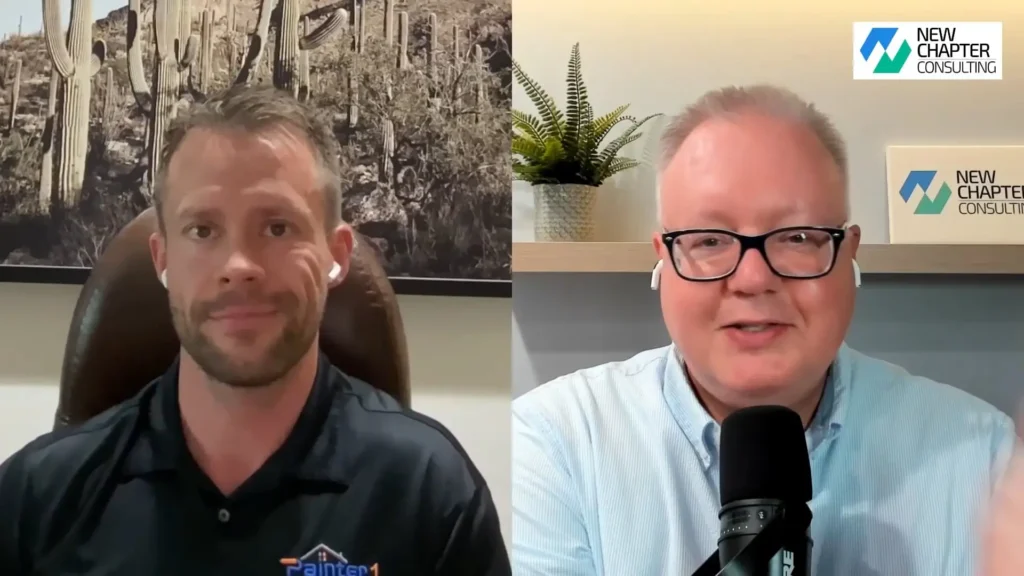
In this Franchise Spotlight conversation, I sat down with Jason Leber, Managing Partner and Co-Founder of Painter1, a residential-focused painting franchise built by a team that spent years inside a competing system before launching their own. What came through clearly was that Painter1 is not an iteration on a generic franchise model. It is a deliberate response to specific failures they watched up close.
The Market Looks Saturated. Good.
When someone first considers a painting franchise, the fragmentation of the market can feel like a problem. There are a lot of painters out there: solo operators, small crews, neighborhood guys who have been doing this for years. The instinct is to wonder whether there is room.
Jason flips that instinct. The fragmentation is demand made visible. There are that many providers because there is that much work. The issue is not the volume of competition. It is the quality of it.
His description of how a homeowner actually experiences the bidding process is telling. Of six painters who receive an inquiry, roughly half will never follow up at all. They lack the systems to track leads consistently. Of the three who do respond, two will show up in unmarked vehicles, no website worth reviewing, no warranty to speak of. The professional in the group, the one with a branded vehicle, branded attire, a tablet for on-site estimating, and a two-year warranty, does not have to out-price anyone. The competition has already disqualified itself.
That is the position Painter1 owners are designed to occupy. Categorically different from what the homeowner has already experienced.
What the Owner Actually Does
One of the most common points of confusion for people evaluating a painting franchise is the question of what they would actually be doing if they are not picking up a brush. Jason breaks it down to three functions: estimating, project management, and business management through KPIs.
Estimating is the customer-facing work. It is also, as Jason puts it, a happy call. The homeowner is not dealing with a disaster. They want their home to look better, and they are often surprised by how accessible the price is. The average residential job runs in the mid-thousands of dollars, according to Jason’s description of the business.
Project management means overseeing subcontractor crews. Painter1 operates on a 1099 subcontractor model, which changes the labor math considerably. The painters the owner works with are often the same independent operators the Painter1 model competes against on the consumer side. They want the work. They do not want the overhead of running a business. That arrangement is built into the model.
Business management is the owner’s strategic layer: tracking KPIs, reviewing what the software surfaces, staying close to the numbers. Jason comes from a sales and business background, not a painting background, and that is not incidental. He consistently describes the ideal Painter1 owner as someone who is comfortable managing by data. He’s not looking for painters.
What They Learned at the Last Company
Before Painter1 existed, Jason and his co-founders were at Five Star Painting, a competing franchise organization. When Five Star was acquired, the franchisees received nothing from the transaction. Not equity. Not a share of the sale. The people who had built the value of that system at the ground level watched the event pass them by entirely.
That experience produced three structural decisions at Painter1.
The first is the territory model. Rather than selling exclusive zip code clusters that require an owner to buy multiple territories to cover a metro area, Painter1 sells the entire major metro. One owner, one city. Jason notes that with competitors, a market like Dallas or Salt Lake City might represent eight to twelve separate franchise units. At Painter1, one owner covers that ground. Multiple owners in a market are possible, but the system caps density, and the network effect of multiple branded vehicles in one area creates brand presence that benefits all of them.
The second is the mentor program. New owners do minimal classroom training and then go directly to an existing owner’s market to learn in the field. The mentor is compensated by the franchise system throughout a full year of check-ins, visits, and support. The incentive structure matters here: the mentor has a financial reason to ensure the new owner actually succeeds, not just completes training.
The third is the equity pool. Ten percent of the Painter1 franchise system is owned collectively by franchisees. Every new owner enters that pool automatically. The intent is that when Painter1 is eventually acquired or sold, the owners who built the system share in the outcome. It also addresses the adversarial dynamic that can develop between franchisors and franchisees. When you own a piece of the brand, the incentives are harder to separate.
The Objection Worth Taking Seriously
The painting category has real competition, including other franchised painting companies. Someone evaluating Painter1 is likely also looking at other painting franchises, not just other categories. The reasonable question is whether these structural features are genuinely different or whether they sound better on paper than they work in practice.
Jason’s answer to the territory concern is honest and direct. There is a cap on owners per market. And the experience in markets where multiple Painter1 owners operate, like Salt Lake City with three, has been that lead volume is sufficient to support each of them without meaningful conflict. They are often sourcing leads from different channels entirely.
The mentor program is verifiable through validation calls with existing owners, which is standard due diligence in any franchise evaluation. The equity pool is structural and documented. These are not talking points. They are things a prospective owner can examine directly.
A Clear Picture for the Right Person
If you have a background in sales or operations, or any field where managing to metrics is second nature, a painting franchise may deserve serious attention. Particularly if you want to own a business without a physical location, significant inventory risk, or dependency on a narrow economic window.
Painter1 specifically is worth a close look if you want a single territory covering an entire market, a mentor relationship built into your first year, and a structural stake in the brand you are helping to build.
The best next step is a direct conversation. I work with prospective franchise owners at no cost to them, helping them evaluate opportunities like this one against their goals, finances, and what they actually want their days to look like. If Painter1 is on your shortlist, or if you want help building one, you can book a call with me at the link below.