
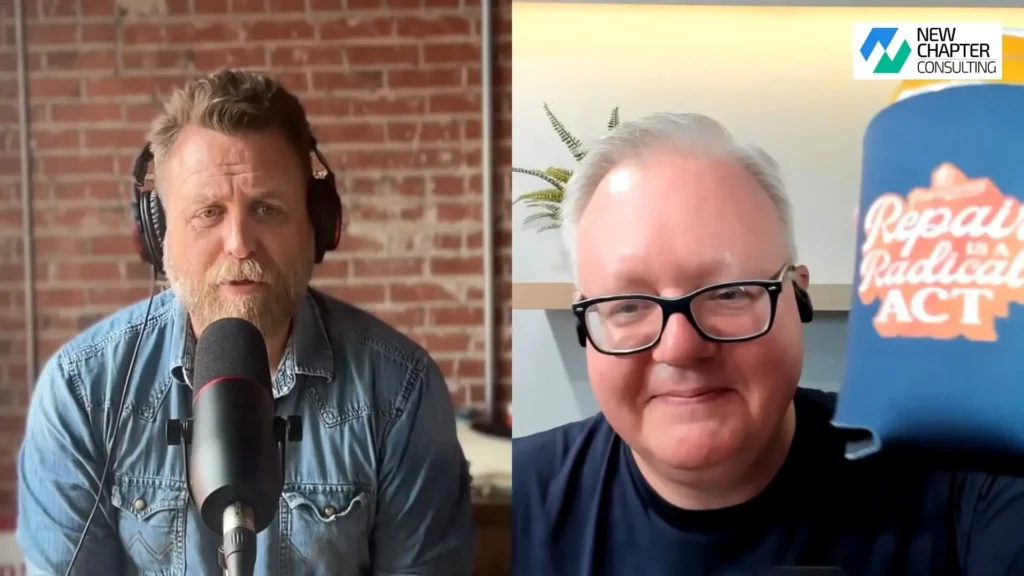
A $9 Billion Industry Is Ignoring This Repair Niche
How Preservan built a franchise around the repair option the industry doesn’t want you to know about
The window replacement industry in the United States generates roughly $9 billion a year. That number exists, in part, because replacement companies have spent decades convincing homeowners there is no other option.
Ty McBride thinks that’s wrong. He built a business to prove it.
McBride is the founder of Preservan, a franchise that repairs wood rot using an epoxy resin system rather than tearing out and replacing what’s already there. The work is durable, the results are nearly invisible, and the service comes with a 10-year warranty. The average job costs around $2,500. A full window replacement job can run into the tens of thousands, and that’s before the contractor talks you into replacing the ones that weren’t damaged yet.
The Problem Preservan Solves
Most homeowners end up in the same situation: you find a small patch of rot, maybe the size of your fist, on a window or door frame. You call a replacement company. They come out, assess the situation, and explain that the window is no longer in production. So you’ll need a new one. But the one next to it won’t match the new one, so you’ll need two. And while they’re at it, you might as well do them all.
A problem that felt minor turns into a full-scale project with an invoice to match, a crew of strangers in your home for several days, and months of lead time waiting for custom orders.
Preservan walks in with a different answer. Repair the damaged wood. Keep what works. Spend a fraction of the cost. Go on with your life.
Preservan competes against an industry charging exponentially more for a service most customers never actually wanted in the first place.
Why This Works as a Business
The demand is not going anywhere. Wood decays. It’s an organic material, and no amount of paint or sealant permanently stops the process. Every person with a home built before 2000 is a potential customer. The service does not repeat on a fixed schedule, but customers come back because the problem comes back, and word travels fast in neighborhoods where homes share the same era and the same materials.
The unit economics are simple enough to model from the outside. Owners can scale by adding technicians and vehicles in proportion to demand. There is no brick-and-mortar location, no hefty inventory to carry, and no complex equipment beyond the van and the repair kit.
Single-territory investment runs from $117,000 on the low end to $185,000 on the high end according to Preservan’s Franchise Disclosure Document. Most owners targeting meaningful income land on two to three territories. That additional scope doesn’t multiply startup costs proportionally; you build into it as revenue supports growth.
Who Builds a Good Preservan Business
McBride is direct about this: he doesn’t recruit for sales skill or construction knowledge.
What he looks for is leadership. Specifically, the ability to organize people around a goal, whether you have formal authority over them or not.
His Birmingham franchise is one of the top-performing locations in the system. The owner had spent the previous decade as a stay-at-home mom, traveling with her husband, a Greek Orthodox priest, from parish to parish. She had led volunteers, organized communities, and moved people toward shared goals without the pull of a paycheck or a title. McBride recognized that immediately.
For professionals coming out of enterprise technology, operations, or project management, this translates cleanly. The skill of quarterbacking a team that doesn’t report to you, running toward a shared outcome through influence rather than authority, maps directly to what franchise ownership requires. You’re building a team of technicians, managing a sales process, and coordinating with a support system that handles digital marketing, lead generation, and CRM automation. You are the operator, not the laborer.
McBride puts it plainly: “I can train somebody to do the technical work. I cannot train leadership fast enough.”
The Market Most Competitors Aren’t Touching
Beyond standard residential work, Preservan operates in a niche most home service businesses can’t access: historic preservation.
Across the country, designated historic districts operate under strict guidelines that prohibit replacement of original architectural features. Homeowners in these areas are often stuck. Removal and substitution violates the guidelines, so replacement companies can’t help them. Preservan’s repair method meets the standards that govern these districts.
On the commercial side, federally and state-designated historic properties can qualify for significant tax credits, but only if restoration work follows preservation guidelines. Preservan’s service qualifies. That opens up a separate revenue channel: income-producing historic buildings, government properties, and large-scale restoration projects that carry multi-month lead times but meaningful contract values.
McBride is clear that historic preservation is not where new owners start. Residential work generates the early cash flow. The historic preservation channel is something owners build toward as they develop relationships with architects, property managers, and preservation offices. It is a long game layered on top of a business that already works without it.
How the Support System Works
Preservan runs a 50/50 model on sales and marketing. The franchisor handles digital lead generation through Meta platforms and AI-powered search channels. When a new territory opens, Preservan starts running ads 30 to 45 days before the owner’s training is complete, so there are appointments on the calendar waiting when they come home. The contact center schedules assessments. The CRM automates follow-up. The quoting process is built to be completed on-site, not at a desk that evening.
What owners contribute is local presence. Yard signs, door hangers, direct mail, lunch-and-learns with realtors and property managers, relationships with architects who specialize in restoration work. The playbook exists. The owner executes it.
The network advantage compounds over time. Because all locations run through a shared parent advertising account, data from every market feeds into a single system. When Preservan enters a new city, Meta already has a detailed audience profile to work from. Owners are not testing their way through a new market from scratch.
Resilience Worth Noting
When the economy tightens, homeowners stop spending on discretionary projects and start looking for ways to maintain what they have without replacing it. That’s the trade-off Preservan wins. The average job runs around $2,500, paid with a credit card, not a home equity line. When borrowing costs go up and replacement quotes become harder to swallow, the repair option looks more attractive.
McBride doesn’t claim the business is recession-proof. He says it slows less than the alternative, because the alternative gets more expensive precisely when money is tighter.
And as far as digital disruption goes: No algorithm is going to repair wood rot. The physical work stays human. What technology does for a brand like Preservan is increase the speed and efficiency of the back office, the marketing engine, and the customer experience layer. McBride tracks AI optimization scores. The team adopted AI-powered ad platforms early. For a small, fast-moving brand, that agility is a real advantage over the large replacement companies, which have far more capital and far more internal bureaucracy.
The Mission Behind the Model
Preservan’s tagline is “We save the future by preserving the past.” McBride means it, and it shows in how he talks about the business.
He doesn’t sell franchises or award them. He looks for people who believe in the mission and partners with them. If you see the value in repairing over replacing, in extending the life of what’s been built, in running a business that serves neighbors rather than sells to customers, you’ll never need a sales script. You’ll just talk about what you believe.
The business case is strong. The mission is genuine. For the right person, those two things point in the same direction.
—
*Scott Elliott is the founder of New Chapter Consulting, where he helps professionals evaluate franchise opportunities at no cost to the candidate. If you’d like to learn more about Preservan or explore whether franchise ownership fits your goals, book a call with Scott here.*