
Key takeaways
Many leadership skills transfer from corporate roles to ownership, but context and accountability change.
New owners must shift from specialist to generalist, especially early on.
Culture and values are not optional, even in very small businesses.
Planning and mindset become more important as ownership responsibility increases.
The owner’s role evolves from doing the work to setting direction and standards.
From corporate leadership to ownership
Moving from corporate leadership into business ownership is not simply a change in title. It is a change in responsibility, mindset, and identity.
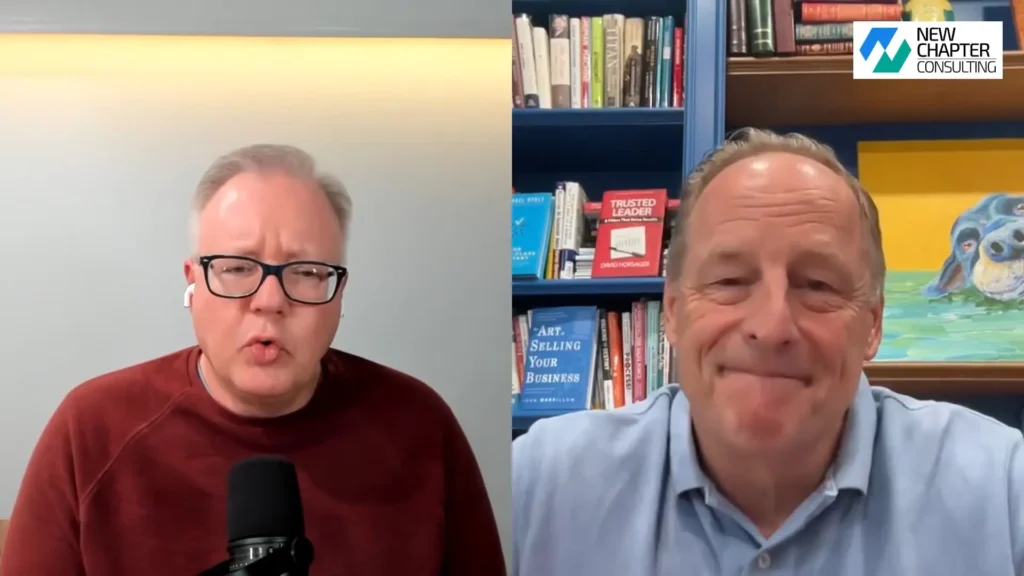
In this Ownership Essentials interview, Scott Elliott sits down with Charlie Janes, executive coach and business owner with Focal Point Business Coaching, to explore what changes and what stays the same when leaders move from managing teams to running a business.
Charlie brings experience from both sides. He spent decades in Silicon Valley leading large sales organizations before transitioning into franchise ownership and executive coaching.
Leadership skills that transfer best
According to Charlie, many of the fundamentals from corporate leadership carry over directly into ownership.
The most transferable skills include:
Hiring and retaining great people
Communicating clearly and consistently
Strategic planning and goal setting
Establishing best practices and systems
These skills matter regardless of company size. Whether leading a division or a small business, owners still succeed by building strong teams and clear operating rhythms.
What surprises new business owners
One of the biggest surprises for first time owners is sales.
Even leaders with extensive sales experience often struggle when they must promote themselves rather than a corporate brand. Without the structure, reputation, and resources of a large organization, selling can feel personal and uncomfortable.
This shift requires owners to rethink how they show up in the market and how they communicate value without hiding behind a logo.
From specialist to generalist
Corporate leaders often operate within a defined function. Ownership reverses that dynamic.
In the early phase of a business, owners must become competent across multiple disciplines, including sales, service delivery, and administration. Charlie describes this as the learning phase, followed by growth and eventually decline.
As the business scales, the owner’s role should move away from daily execution and toward vision, culture, and strategic partnerships.
The owner as standard bearer
Franchise ownership introduces an additional leadership responsibility.
Owners must fully embrace the franchisor’s playbook. Charlie emphasizes that the fastest path to success comes from implementing proven systems consistently, not selectively.
Innovation has its place, but only after the fundamentals are mastered and profitability is established.
Why culture matters early
Culture is not a luxury reserved for large organizations. In small businesses, it is even more visible.
Charlie advises owners to start by defining their personal values, then narrowing them down to a short list that truly guides decisions. These values serve two critical purposes:
Customers use them to decide who to do business with
Employees use them to make decisions when the owner is not present
To avoid values becoming wall art, Charlie recommends focusing on one value at a time and actively recognizing behaviors that reflect it.
Consistency over complexity
Without corporate infrastructure, small business owners can overcorrect by constantly changing processes or expectations.
Consistency is more important than perfection. Systems, values, and standards must remain stable long enough for teams to align and perform. Adjustments should be intentional and infrequent.
Leadership habits that matter early
Charlie uses a structured coaching approach that emphasizes four foundational habits:
Understanding behavioral and communication styles
Setting clear quarterly, annual, and longer-term goals
Defining personal and lifestyle goals alongside business goals
Creating a simple strategic plan grounded in values and vision
These habits create clarity before complexity enters the picture.
Mindset and personal development
Ownership increases pressure. Without attention to physical health and mindset, stress can quickly erode performance.
Charlie highlights the growing issue of disengagement among both employees and business owners. Mindset work, self-awareness, and sustainable habits are not soft skills. They are performance drivers.
The skill that matters more, and less
As a business grows, planning becomes more important at every stage.
At the same time, being the craftsman becomes less important. Owners who fail to step out of execution eventually limit growth. The role shifts toward vision, culture, and long-term direction.
Final thoughts
The transition from corporate leader to business owner is not for everyone. However, for those willing to adapt their mindset, embrace planning, and invest in culture, ownership can be deeply rewarding.
As Charlie notes, many owners later wonder why they waited so long to make the move.